

Elder Scams Are Getting Smarter: Here’s How to Stay Protected
Real-world scam scenarios—and the simple habits that help you stop them in the moment.
It had been a long shift. The kind where the coffee runs out before the calls do. Where everything blurs together by the end, and you’re mostly running on instinct.
John dropped his boots by the door, finally home. The house was quiet. His phone buzzed—it was his mom.
“Hey… quick question,” she said. “I got a call from the credit union. They said there might be suspicious activity, and they need to verify a few things.”
John didn’t answer right away. Not because he didn’t know what to say, but because he did. They’d had this conversation before. It wasn't a drawn-out lecture, just quick check-ins over time. Small reminders.
If something feels off, slow down.
If someone is asking for information, stop.
And before you do anything, call someone you trust.
So, she did. And that one decision changed what could have happened next.
Below are a few common scam scenarios to watch for. These situations don’t always look like scams at first, and that’s exactly the point.
A familiar name shows up on the caller ID. The person on the other end is calm, professional and even reassuring. They explain there’s been suspicious activity, and they’re here to help protect the account.
Nothing feels rushed. Nothing feels aggressive.
Until the next step.
They suggest moving money “temporarily” to keep it safe, framing it as the best way to "protect" the account. What started as a routine call suddenly requires quick action.
Why it works: It doesn’t feel like a scam. It feels like the right thing to do.
Red flags:
Once connected, the person on the other end is calm and reassuring. They walk through the steps to “process a refund,” asking the member to follow along on their computer.
Download this.
Click here.
Let me guide you through it.
Before long, screens are being shared. And without realizing it, access to personal information and accounts has been handed directly to the scammer on the phone.
Why it works: It feels like help, not a scam. There’s no obvious pressure. No threats. Just a step-by-step solution to a problem that shouldn’t be there in the first place.
Red flags:
If anyone asks you to download software or share your screen to resolve a financial issue, stop the interaction immediately.
The messages start simple. Friendly. Easy.
“Is this still available?”
“I can send payment now.”
“I just need your email to confirm.”
At first, it feels like any other transaction. Buying or selling, it doesn’t matter.
Then the steps change.
There’s a “payment” confirmation that doesn’t quite show up in your account.
A message about needing to upgrade an account to receive funds.
Or a code to “verify” you’re real.
Individually, each step feels small.
Together, they move you further away from what you can actually see and confirm.
Why it works:
It feels like a normal, everyday transaction. There’s no obvious pressure at first, just a few extra steps to “complete” the process. By the time something feels off, it’s already in motion.
Red flags:
Keep the transaction in one place and rely on what you can verify yourself. Don’t trust screenshots, emails or messages as proof of payment—check your account directly. Never send money back or share verification codes, even if the request seems routine. If something feels off, pause the interaction and step away. Taking a moment to check can make the difference between a normal transaction and a costly mistake.
Over time, that help turns into reviewing finances, offering advice and stepping in where they weren’t asked.
Then comes the pressure. A suggestion. A request. Maybe just once. And slowly, access expands while the circle of trust shrinks.
Why it’s important: It builds trust over time, instead of asking for it all at once.
Red flags:
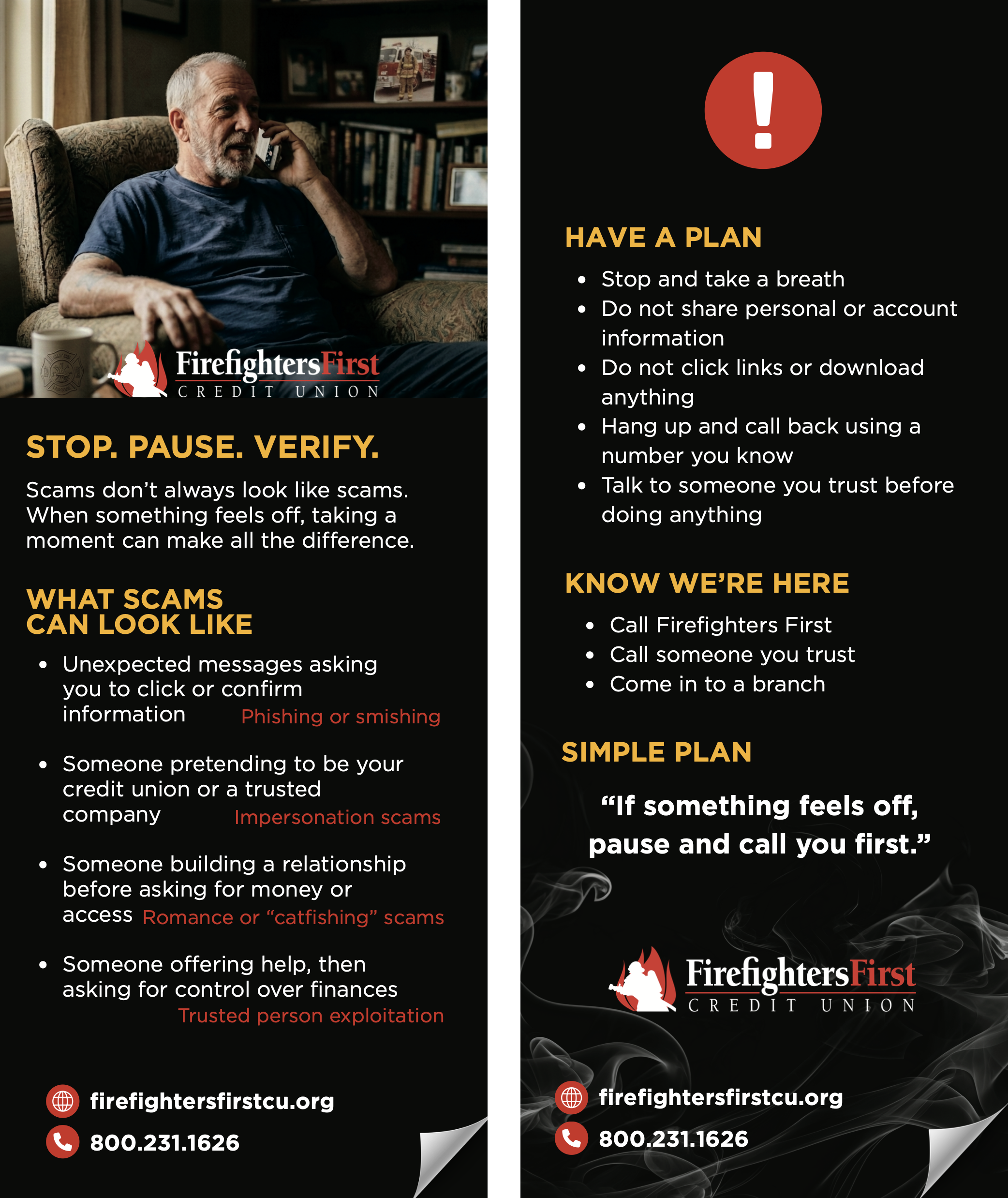
That’s what made the difference for John’s mom. Not luck, not timing. Just a simple habit they had already put in place.
They talked about it ahead of time. They kept it simple.
If something feels off, slow down.
And before you do anything, call someone you trust.
Having these kinds of conversations with the people in your life such as parents, grandparents or anyone who might be at risk, can make a real difference. It doesn’t have to be complicated. Just a quick check-in, a shared plan and a reminder that they don’t have to figure it out alone.
Because the goal isn’t to avoid every scam. It’s to recognize the moment, pause, and take back control before anything happens.
John dropped his boots by the door, finally home. The house was quiet. His phone buzzed—it was his mom.
“Hey… quick question,” she said. “I got a call from the credit union. They said there might be suspicious activity, and they need to verify a few things.”
John didn’t answer right away. Not because he didn’t know what to say, but because he did. They’d had this conversation before. It wasn't a drawn-out lecture, just quick check-ins over time. Small reminders.
If something feels off, slow down.
If someone is asking for information, stop.
And before you do anything, call someone you trust.
So, she did. And that one decision changed what could have happened next.
Below are a few common scam scenarios to watch for. These situations don’t always look like scams at first, and that’s exactly the point.
The "Fraud Department" Call
The call sounds routine at first.A familiar name shows up on the caller ID. The person on the other end is calm, professional and even reassuring. They explain there’s been suspicious activity, and they’re here to help protect the account.
Nothing feels rushed. Nothing feels aggressive.
Until the next step.
They suggest moving money “temporarily” to keep it safe, framing it as the best way to "protect" the account. What started as a routine call suddenly requires quick action.
Why it works: It doesn’t feel like a scam. It feels like the right thing to do.
Red flags:
- Pressure to move money
- “Safe account” language or instructions to move funds elsewhere
- Requests for passwords, usernames or access codes to help them with the "process"
- Being told not to tell family or the credit union what’s happening
The “Refund Help” Email
An email comes through about a charge you don’t recognize. But it looks real: the logo, formatting and even language that feels familiar. The message says there’s a problem with a payment and offers help to fix it. A number to call. A link to click.Once connected, the person on the other end is calm and reassuring. They walk through the steps to “process a refund,” asking the member to follow along on their computer.
Download this.
Click here.
Let me guide you through it.
Before long, screens are being shared. And without realizing it, access to personal information and accounts has been handed directly to the scammer on the phone.
Why it works: It feels like help, not a scam. There’s no obvious pressure. No threats. Just a step-by-step solution to a problem that shouldn’t be there in the first place.
Red flags:
- Emails about charges or payments you don’t recognize
- Requests to call a number or click a link to resolve an issue
- Instructions to download software or share your screen
- Someone guiding you step-by-step to “fix” the problem
If anyone asks you to download software or share your screen to resolve a financial issue, stop the interaction immediately.
The “Online Marketplace"
A listing pops up with a great deal. The photos look real. The profile seems normal.The messages start simple. Friendly. Easy.
“Is this still available?”
“I can send payment now.”
“I just need your email to confirm.”
At first, it feels like any other transaction. Buying or selling, it doesn’t matter.
Then the steps change.
There’s a “payment” confirmation that doesn’t quite show up in your account.
A message about needing to upgrade an account to receive funds.
Or a code to “verify” you’re real.
Individually, each step feels small.
Together, they move you further away from what you can actually see and confirm.
Why it works:
It feels like a normal, everyday transaction. There’s no obvious pressure at first, just a few extra steps to “complete” the process. By the time something feels off, it’s already in motion.
Red flags:
- Messages or emails that look familiar but come from an unexpected sender
- Payment “confirmations” that don’t show up in your actual account
- Instructions that add extra steps to receive or complete a payment
- Requests for personal details or verification steps that feel unnecessary
Keep the transaction in one place and rely on what you can verify yourself. Don’t trust screenshots, emails or messages as proof of payment—check your account directly. Never send money back or share verification codes, even if the request seems routine. If something feels off, pause the interaction and step away. Taking a moment to check can make the difference between a normal transaction and a costly mistake.
The “Trusted Person”
This one doesn’t happen all at once. It starts small. Someone offering help. Running errands. Assisting with daily tasks.Over time, that help turns into reviewing finances, offering advice and stepping in where they weren’t asked.
Then comes the pressure. A suggestion. A request. Maybe just once. And slowly, access expands while the circle of trust shrinks.
Why it’s important: It builds trust over time, instead of asking for it all at once.
Red flags:
- Sudden changes in spending habits or account withdrawals
- Someone new becoming involved in financial decisions
- Pressure to act without involving others
- Isolation from family or long-term trusted advisors
Next Step: Start the Conversation Early
Scammers are getting better at what they do. But staying protected doesn’t come down to knowing every tactic; it comes down to what you do in the moment.That’s what made the difference for John’s mom. Not luck, not timing. Just a simple habit they had already put in place.
They talked about it ahead of time. They kept it simple.
If something feels off, slow down.
And before you do anything, call someone you trust.
Having these kinds of conversations with the people in your life such as parents, grandparents or anyone who might be at risk, can make a real difference. It doesn’t have to be complicated. Just a quick check-in, a shared plan and a reminder that they don’t have to figure it out alone.
Because the goal isn’t to avoid every scam. It’s to recognize the moment, pause, and take back control before anything happens.
Your Moment-to-Pause Checklist
The goal is not to avoid every scam. It is to recognize the moment, slow down, and take back control before anything happens. Here is a quick list to help you do exactly that.