
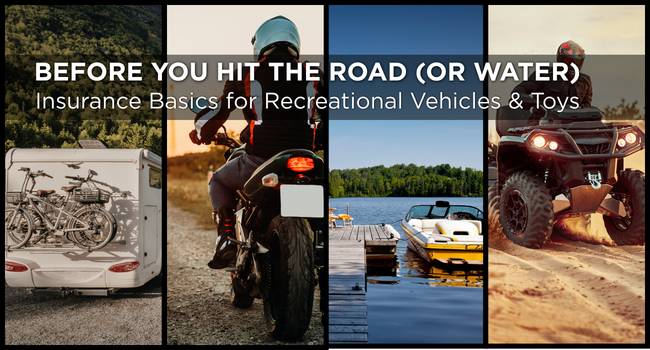
Before You Hit the Road (or Water):
Insurance Basics for Recreational Vehicles and ToysRecreational vehicles make it easier to enjoy time off on your own terms. Whether that means a weekend road trip, a day on the water or a longer family getaway, the right "toy" can turn downtime into real recharge time.
Before you head out, it's worth understanding how insurance works for recreational vehicles and watercraft. Coverage isn't one‑size‑fits‑all, especially for firefighters whose schedules, storage needs and travel patterns don't always look typical.
Here's what to know before you get moving.
Recreational insurance isn't the same as auto insurance
RVs, boats and other recreational vehicles are insured differently than everyday cars. Some are used seasonally. Others are stored for long stretches or travel long distances during short windows of time.
Because of that, insurance for recreational vehicles often includes protections beyond standard auto coverage. Understanding those differences early can help prevent gaps that may only show up after something goes wrong.
Common types of coverage for recreational "toys"
While coverage varies, insurance for recreational vehicles and watercraft commonly considers:
- Physical damage protection, which can help cover repair or replacement if a vehicle is damaged by fire, weather, or theft
- Liability coverage, which may help protect you if someone is injured or property is damaged
- Personal property coverage, which may apply to items stored inside or on your vehicle
The right combination depends on how the vehicle is used, where it's stored, and how often it's on the road or water.
Storage and seasonal use matter more than you think
Firefighters often balance long shifts with extended time off. That can mean recreational vehicles sit in storage, at a station, or at home for weeks at a time, then see heavy use during off‑duty periods. Boats and watercraft may go months without use before spring and summer begin.
Insurance policies can treat storage and seasonal downtime differently than active use. That makes it important to understand how coverage applies when a vehicle isn't moving, not just when it is.
Watch for common coverage gaps
One of the most common surprises for first‑time owners is assuming coverage works the same way year‑round. Some policies may limit coverage while a vehicle is parked, stored or unused for extended periods.
Taking time to review what's included, what's optional and what may need adjustment helps avoid surprises later, especially before a long trip or an active summer season.
Insurance is part of the full cost of ownership
Financing gets you the keys, but insurance, maintenance and storage all play a role in long‑term affordability. Looking at these pieces together makes it easier to budget realistically and enjoy your toy without added stress.
Many firefighters start by exploring financing options, then build their insurance plan around how the vehicle will actually be used. Others review coverage after their plans shift from occasional use to more frequent travel.
When these pieces work together, it's easier to focus on the experience instead of the risk.
A quick check before the adventure starts
Before you hit the road or launch the boat, it helps to:
- Review how and where your recreational vehicle will be used
- Confirm how coverage applies during storage and travel
- Make sure your protection matches your lifestyle, not just the vehicle
A short review now can help make summer adventures smoother and more enjoyable.